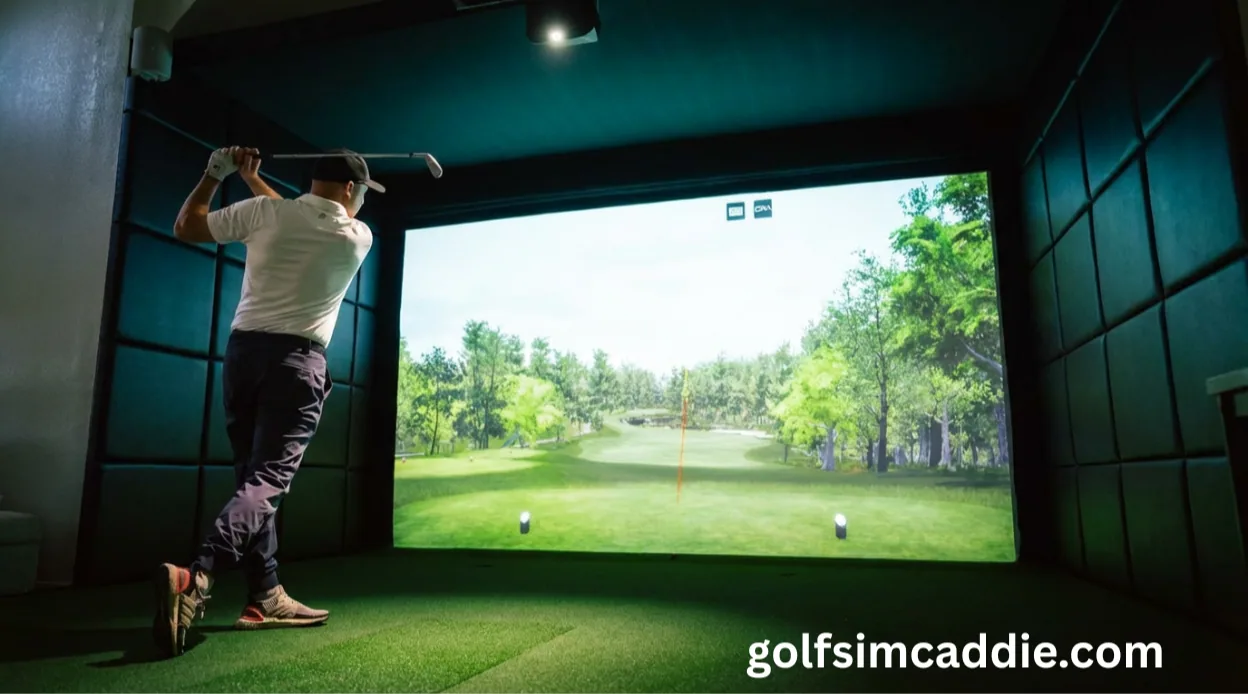
If you're building a golf simulator in a tight space, short-throw projectors seem like the obvious solution. They promise a large image from just a few feet away, which sounds perfect for rooms where you can't mount a projector far behind you.
But short-throw projectors aren't magic. They come with real tradeoffs in image quality, cost, and mounting complexity. Before you commit, it's worth understanding exactly what you're getting into.
What Makes a Projector "Short-Throw"?
Projectors are categorized by their throw ratio which is the relationship between the projector's distance from the screen and the width of the image it produces.
- Standard throw: Needs roughly 10-15 feet from the screen for a 100-120 inch image
- Short throw: Produces the same image from 4-8 feet away
- Ultra-short throw (UST): Sits just inches from the screen, often on a floor stand or ceiling mount directly above the hitting area
For golf simulators, the appeal of short and ultra-short throw is obvious. If your room is only 12 feet deep, a standard throw projector might require awkward ceiling mounting or compromise your image size. A short-throw model seems like it solves the problem cleanly.
When Short-Throw Makes Sense
Short-throw projectors work well in specific scenarios:
Shallow Rooms with Limited Depth
If your total room depth is under 14 feet and you need to preserve space behind the hitting area, a short-throw projector can be mounted closer to the screen while still producing a usable image size. This matters in basements, garages, and converted bedrooms where every foot counts.
Avoiding Shadow Issues
Standard throw projectors mounted behind the golfer can create shadow problems where your body blocks part of the projected image during your swing. Short-throw projectors mounted in front of or directly above the hitting area minimize this issue, keeping the image clear throughout the swing.
Ceiling Height Constraints
Some short-throw projectors can be mounted on a short ceiling bracket or even a floor stand, which helps in rooms with lower ceilings where a traditional overhead mount isn't practical.
The Tradeoffs You Need to Know
Short-throw technology isn't free. Here's what you're giving up:
Higher Cost
Short-throw projectors cost more than standard throw models with equivalent brightness and resolution. You'll typically pay 30-50% more for a short-throw unit compared to a standard throw projector with similar specs. Ultra-short throw models cost even more.
Image Quality Compromises
Short-throw optics are more complex, and that complexity can affect image quality. Common issues include:
- Lens distortion near the edges of the image, especially on ultra-short throw models
- Hotspotting, where the center of the image appears brighter than the edges
- Focus issues across the entire screen, since the projector-to-screen distance varies more dramatically at short range
High-quality short-throw projectors minimize these issues, but they're rarely eliminated entirely, especially at lower price points.
More Sensitive Mounting
Short-throw projectors amplify small alignment errors. A projector that's slightly tilted or off-center will produce a noticeably skewed image. Standard throw projectors are more forgiving because the greater distance gives you more margin for error.
This means mounting a short-throw projector correctly takes more time and precision. You may need adjustable mounts and multiple calibration sessions to get the image right.
Limited Upgrade Flexibility
If you buy a short-throw projector to fit a specific room, you're locked into that configuration. Standard throw projectors give you more flexibility. If you move to a different space or want to upgrade your screen size, you can often adjust the projector position rather than replacing the unit entirely.
When Standard Throw Is the Better Choice
If your room has 15 feet of depth or more, a standard throw projector is almost always the better option. You'll get:
- Better image quality for the same budget
- Easier mounting and calibration
- More upgrade flexibility down the road
- A wider selection of models to choose from
Standard throw projectors also pair better with rear-mounted screens in dedicated simulator bays, since you can position the projector behind a frame or enclosure where it's protected from errant club contact.
For a deeper comparison of projector options versus alternative display types, check out our TV vs projector guide.
Making the Right Call for Your Space
Before committing to a short-throw projector, measure your actual room constraints and map out the projector placement. Consider:
- Where will the projector mount? Ceiling, floor stand, or wall-mounted?
- What's the distance from the mount location to the screen surface?
- What image size do you need, and can you achieve it at that distance?
Use the projector manufacturer's throw ratio calculator to confirm the numbers. If you're on the edge, it's often better to rethink your screen size or room layout rather than force a short-throw solution that compromises image quality.
The Build Wizard can help you evaluate your room dimensions and match them to appropriate projector types based on your specific constraints.
Bottom Line
Short-throw projectors solve real problems for golfers building simulators in tight spaces. They're not gimmicks. But they're also not the default choice, they're a specialized tool for specific situations.
If you have the room for standard throw, use it. You'll get better image quality, easier setup, and more flexibility for future changes. Reserve short-throw for spaces where it's genuinely necessary, and budget accordingly for a quality unit that minimizes the inherent tradeoffs.
The projector you choose affects every session you play. Take the time to get it right.